Analysis
An interview with Helen Duffy on the Situation of Detainees at Guantanamo Bay
25 Sep 2025
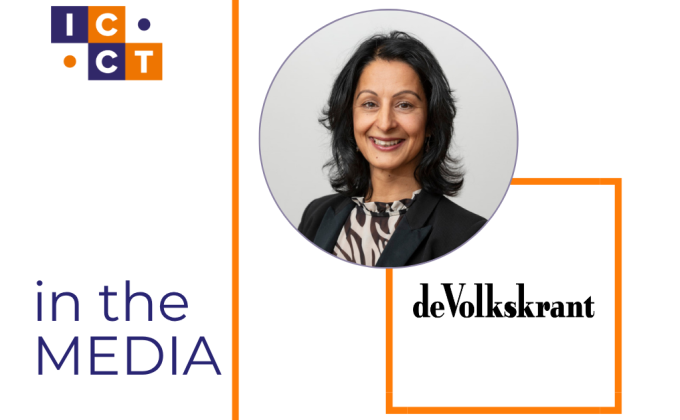
Helen Duffy is a professor of international humanitarian law and international human rights law at the University of Leiden, and the international counsel of Abu Zubaydah, who is still detained without charge at Guantanamo Bay. She has represented him in many cases before the ECtHR and UN bodies. Although she has won these cases, the rulings have yet to be implemented in full.
Tanya Mehra (TM): Helen, welcome. I am very glad that you are willing to do this interview with ICCT. Today, I would like to have a conversation about your experience representing Abu Zubaydah and how this reflects on the broader issues relevant to those detained in Guantanamo Bay.
Helen Duffy (HD): It’s a pleasure to be here. Thank you for the invitation and your interest in this topic, which is really important, but increasingly neglected.
TM: Guantanamo Bay was established more than twenty years ago as a detention facility for individuals captured in the United States' so-called “War on Terror,” which was initiated following the 9/11 terrorist attacks. As of August 2025, fifteen detainees remain at Guantanamo. The legal issues surrounding the operation of the Detention Centre are manifold, including numerous human rights violations and denial of detainees’ right to a fair trial. Furthermore, the recent transfer of detainees from Guantanamo Bay poses significant questions about the future of the fifteen remaining prisoners and the feasibility of closing the detention camp.
Against this background, Helen, could you first elaborate on your experience as the lead counsel in the cases you have brought on behalf of one of the detainees, Abu Zubaydah?
HD: I have represented Abu Zubaydah since 2009, which is a shocking length of time, especially when we think about how little has changed for him despite the significant legal work. He has now been detained for over 23 years – in CIA secret detention from March 2002 to 2006, then at Guantanamo – without any lawful basis, charges, due process, or trial.
His story began when he was taken into CIA detention in March 2002, at which point the US announced it had caught the number 3 in al-Qaeda. It now recognises he was not even a member of al-Qaeda, but he is still detained. He was one of the so-called ‘high-value detainees’ given the information he allegedly possessed, and brutally tortured at secret CIA detention sites across the globe. This is a global story, as he was detained in Pakistan, transferred to Thailand, Poland, Lithuania, Morocco, Afghanistan, and on to Guantanamo Bay.
I have represented him in various international cases against all states that are known to have been involved, and to share responsibility with the US for the egregious violations of his rights. This included cases against Poland and Lithuania that were won before the ECtHR in 2014 and 2018. The court found violations and ordered reparations, including compensation, and that these states should make representations on his behalf to the US. More recently, there was a complaint to the UN Working Group on Arbitrary Detention, to bring legal action collectively against all of those states that share responsibility for his unlawful detention and torture. The UN working group made clear that seven states (the US, the UK, Lithuania, Poland, Thailand, Afghanistan, and Morocco) all share legal responsibility for what happened to Abu Zubaydah in CIA torture and secret detention, and contributed to what is happening to him today. There have been many other initiatives, petitions, and cases on the national and international level – like securing his removal from the UN Sanctions list and several pending claims in the UK and elsewhere.
It is hard to reflect on the experience as counsel in these cases. This work is crucial for both Abu Zubbaydah and the rule of law. It’s also hard to think about successes while he is still in unlawful detention. Partly what these cases do is to keep attention on his case and the injustice of it. They don’t solve the problems, but may provide tools to be used towards the political solutions that are needed to end Guantanamo and learns the lessons of the past so we don’t repeat them. The judgments and decisions clarify law and facts, limit any plausible deniability that his ongoing detention in Guantanamo is unlawful, that many states are responsible and need to act now to provide reparation. They help uncover the truth to an extent and expose how far short we have fallen in meeting the obligations of investigations and prosecutions in line with international law. Mostly, I see the litigation as recognising his humanity and ongoing suffering. But the reality is that these judgments and decisions are powerful on paper but have yet to be implemented.
TM: Why do you think they have not yet been fully implemented?
HD: I think that this goes to the heart of the problem with these cases and counter-terrorism or national security more broadly, which is ultimately a lack of political will to ensure respect for human rights. That’s sadly true even among those states that remain relatively rule-of-law-friendly.
When it comes to the US, there is a clear lack of political will, across administrations, to end the anomaly of Guantanamo Bay, and to confront the danger of its legacy. There is a lack of political will by those other states that share responsibility to step up and do what is required of them to help end the violations. People shape political will, and part of our challenge is to engage not only states but ordinary people on why these cases matter.
In terms of non-implementation, there are striking gaps. No state has acknowledged their role, apologised, investigated, or provided accountability, despite what is a well-documented systematic global torture programme. Then another important aspect of reparation is doing everything possible to end the ongoing violations. Offering relocation is a basic thing states can do to make release more feasible, and facilitate a safe and secure life after Guantanamo. Such offers could help to end these violations while states would fulfil their legal and moral obligations. But the silence is deafening.
TM: Let’s look at some of the legal issues in these cases. What is the legal basis for the US to hold these individuals at Guantanamo Bay to begin with?
HD: There is no legal basis for the detentions at Guantanamo Bay. Under international law, for there to be a lawful detention, there has to be legal grounds for that detention and basic procedural justice. In these cases, there are no grounds for detention provided for in law, and they have always been completely arbitrary because they deny all of the basic due process rights. Detention for life without a single charge, or any opportunity to know and challenge any evidence against you, is Kafkaesque.
The US administrations claim that “law of war authority” justifies detention at Guantanamo. This relies on the notion of an ongoing global war against al-Qaeda and associated terrorist groups. This idea of a global war with unidentified adversaries that never ends, but carries a right to detain people until it does, is an absurd and widely discredited notion. This use of ‘war’ rhetoric has provided cover for so many violations of international law for over 20 years. And this case reminds us of its terrible consequences for people like my client, whose indefinite, arbitrary detention is justified by reference to these forever wars. Some of the legal work has led to rejections of these purported justifications. For example, the US made these arguments about “law of war authority” as a purported lawful basis for Zubaydah’s detention to the UN Working Group on Arbitrary Detention, and the Working Group rejected this and made clear that he needs to be immediately released.
There is no credible argument in international law that you can detain someone for 23 and a quarter years, without ever being brought before a court of law or ever being charged with anything at all, and with no commitment to change course. That’s against the notion of law itself. The complete unlawfulness of this has been authoritatively established, but more needs to be done to give effect to those decisions and the obligations underpinning them.
TM: Why and how far have individuals who are being held in this facility been able to challenge their detention within the US and abroad?
HD: Within the US, there are no legal remedies in practice. The ECtHR described Zubaydah’s situation in Guantanamo without charges or trial as a flagrant denial of justice, which sums up the US system. In principle, remedies exist, but not in practice. For example, litigation related to habeas corpus, the right to challenge the lawfulness of detention before a court of law, culminated in the Boumediene v. Bush case in 2008 at the US Supreme Court, which found that Guantanamo detainees did have a right to habeas corpus. But Abu Zubaydah’s case demonstrates the hollow hope that this represented. The courts are just not functioning in a legal sense, as a real counter to the administration or a meaningful vehicle for release. The periodic review board system – the only sort of review process – is even more dysfunctional, denying him the right to challenge any reasons or evidence against him, and in the last one, he has not even been informed of the outcome of the process. In the past, they just said “no” with no reasons given. On the only one occasion when reasons were given, they were spurious and speculative, such as expressing concern that he could have honed his organisational skills at Guantanamo!
Other forms of legal action that should be possible against those responsible for violating his rights are facing multiple roadblocks. The doctrine of state secrecy has been relied upon to throw out civil claims. In May, the courts threw out our client’s civil case against the psychologists who were CIA consultants designing the so-called enhanced interrogation or torture techniques and implementing them on Abu Zubaydah. The court said they were agents of the US government, and not therefore subject to the US courts’ jurisdiction. Coupled with the refusal to investigate, impunity prevails.
Among others, these and other roadblocks in the US prompted us to bring international action to the European court, UN treaty bodies, and national courts. Each of these cases helps a little, but many of the rights denied back in 2002 are still being denied 23 years later.
TM: What are the legal obligations of states concerning their citizens who are being held in Guantanamo Bay?
HD: It is important to look beyond nationality and citizenship to consider all relevant states’ obligations. First of all, the obligations of the US are obviously key. The UN working group, in its 2003 decision, said very explicitly that Abu Zubaydah must be immediately released. So the first obligation is cessation, to end this ongoing violation. There are also other obligations in relation to investigation and prosecution, and reparation, that the US entirely shuns.
Looking beyond the US is important, given the number of complicit states ranging from those that allowed their territory to be used to house black site secret detention centres, or those that normalised and benefited from the torture by sending questions to be put to him in the knowledge of his torture, as a UK parliamentary report concluded a few years ago. Those states contributed to his transfer to the ongoing legal black hole of Guantanamo. These states have the obligation to do what they can to ensure his release.
Through legal action, we have sought and achieved clearer and gradually more explicit statements from different courts and bodies about these obligations, including to recognise their role, apologise for that, learn lessons from it, and assist with relocation. We’ve been trying to engage with responsible states, but none of them have acted. It’s quite remarkable. Poland and Lithuania, for example, with their human rights policies, binding judgements against them at the ECtHR, multiple follow-up reports of the Council of Europe finding insufficient implementation, and UN bodies clarifying what their obligations are. These countries paid compensation, which is important. But they drew the line there, far short of meaningful implementation of these judgments, and the reparation and reckoning with the violations of the war on terror that is needed. They should acknowledge their role and offer to relocate our client and other detainees. But not a single state has offered to do that, despite multiple judgments making the facts and their responsibility clear.
We need to talk about the shared responsibility of all states to cooperate to end the anomaly of Guantanamo and address the worst violations of the War on Terror. It is not only for the states directly involved. The global war, and Guantanamo as a low point within it, entail such notorious violations and dangerous symbols of selectivity – that some people are treated as below the law, some states above it. This undermines the credibility of international law and has paved the way for many of the challenges that the world is facing today. So while there may be particular expectations of states of nationality, and obligations on directly responsible states that we are trying to enforce, there are also obligations of all states to cooperate to end these grave violations of international law. All states should be doing what they can, as part of our shared common interest of the international community, even if it does not concern their direct interests or their citizens.
TM: Are there states that have not played a role in detention or arrests, or countries of citizenship which are stepping up in an attempt to resolve the situation and end the unlawful detention?
HD: There is a stark lack of leadership on this issue. Many prefer to view Guantanamo as a historical rather than today’s urgent problem, which it is for ageing men whose lives have been lost there. Guantanamo’s new use as an unlawful detention site for migrants shows that ignoring human rights problems doesn’t resolve them. States can and should show leadership now and offer to facilitate release or to assist the US and others to resolve this tragic saga, but that is not happening yet.
Some states have stepped up particularly on behalf of their own nationals or residents. Others could have done more on behalf of their nationals, undoubtedly. But distinctions based on nationality that have been a factor in helping to get people out of a situation only underscore the arbitrariness and injustice of it. States should act on behalf of their nationals when there are serious violations of their rights like this one, but it goes against the whole idea of human rights that only the people who have influential states on board can secure their freedom. Otherwise, the most vulnerable without supportive or friendly states are left behind - which is exactly what happened at Guantanamo. The first releases included UK and Australian nationals, while those remaining longest, like Abu Zubaydah, a Palestinian raised in Saudi Arabia, lack powerful state advocates.
TM: Thanks, Helen, for also explaining the roles of third states. I am wondering how far the detention violates the obligation aut dedere aut judicare – also referred to as the obligation to extradite or prosecute, since the detainees are neither being prosecuted nor extradited.
HD: In cases like Abu Zubaydah, there’s no trial whatsoever, so there has not been anything like a criminal process. Your question can be relevant in counter terrorism in general, where massive, arbitrary detention really gets in the way of the basic obligations of states to investigate and to prosecute serious acts of terrorism or core international crimes. There are obligations of states to ensure the right to truth and the duty to investigate and ensure accountability, but they are also rights of the victims of any terrorism. The criminal process can be incredibly important.
However, it’s not a central issue in relation to the forever prisoners in Guantanamo Bay, who have never been charged at all. If you’ve detained and tortured someone for over 23 years, without reasons or evidence, you cannot prosecute them now. Abu Zubaydah’s lawyers asked for many years for him to be prosecuted, and to provide any evidence, but none was forthcoming. There is no prospect of a trial, nor could there be anything like a fair trial at this stage, and this has been confirmed through international litigation.
So I feel like the duty to prosecute isn’t a key issue. If there had been any evidence against our client, and if it had provided the basis for charges 20 years ago, that could have been a rule of law response. But it wasn’t.
TM: What do you think will be the prospective outcomes for the forever prisoner?
HD: We do not know what is going to happen. But these are ageing men who, for example, lack medical support, as UN reports document. One prospect is that the world continues to look the other way, and the US continues to refuse to release these people, and they die in prison. That would be a matter of shared shame and further shared responsibility, and a terrible legacy. Another troubling possibility is transfer to locations where they face ongoing violations or even torture and disappearance. That cannot be ruled out, given the lack of foreseeable procedures concerning the transfer of people out of Guantanamo Bay, and the unravelling of non-refoulement protections in the US. In an environment that is ever more unpredictable and transactional, it’s important that states step up and use their leverage. The detention of the remaining fifteen men in Guantanamo does not make any financial sense for governments, nor security sense, nor rule of law sense. So there is at least scope to explore solutions, and a responsibility to do so.
TM: Some states raised concerns that if these prisoners are being transferred, there would be no possibility to prosecute them because, in some cases, the statute of limitations for the alleged crimes has expired. Do you think that there is a role for lawyers to create momentum among states to accept some of the remaining detainees?
HD: Yes, lawyers must continue to expose violations and seek workable remedies. But we need to develop more strategic alliances and find creative ways to engage people – communicators, artists, and responsible filmmakers who don’t misrepresent the facts of his case.
Civil society organisations are crucial in pursuing justice for these detainees, and more could be done. I hope they will not neglect this issue despite how hopeless it can feel, and I realise there is much competition for their time and resources, and that civil society organisations are themselves so often under attack nowadays from so-called counter-terrorism laws.
I think that at this time it is essential to keep reasserting the relevance of law and the importance of this issue. It is also important to make connections to many of the current challenges around the world. For example, in the migration, we see a new context for the same idea of detaining and dehumanising people en masse, creating pockets outside of your own country where they won’t have the protections of the law, and offloading the problem elsewhere. There are wide-ranging implications of how Guantanamo and CIA secret detention normalised states of exception, torture, denial of due process of law, and impunity.
TM: We certainly see many of the challenges that you have raised in the context of Guantanamo Bay happening elsewhere at the moment. You’ve been the counsel of Abu Zubaydah for so many years: how does he see his future?
HD: There are strict limits on what can be said publicly, and he still cannot answer that question for himself due to excessive classification of any statement by him. I can say he is remarkably resilient, thoughtful, and generous, especially given everything he’s been through. He was systematically tortured and had to be brought back to life during his torture, as documented in the US Intelligence Committee Report, and then condemned to lifelong incommunicado detention. There is nothing he can do to influence his own future; it is a complete denial of his rights and his agency. But he remains committed to fighting for his rights and those of others, and telling his story.
There is one important way that he can communicate with the outside world, which is through his art. His drawings have finally been declassified. We are seeking support to exhibit his powerful torture drawings, alongside the judgments that speak to what states have done and what they must do now. Our first exhibition in The Hague in December 2024 was well attended and moving. He was very moved by the people who came to that exhibition and saw and felt his suffering and his expression, and wrote notes of solidarity and support. These things matter. At the end of the day, he is a human being, and it’s important to make him visible, and to send a message that his life and rights matter.
It’s a bleak horizon, but if he can stay resilient, then we must too. We must work to give him and others hope of a life beyond Guantanamo, and to finally close this hideous chapter.
TM: I would like to thank you very much for the time you’ve taken to do this interview with us.
HD: Thank you so much for the invitation and the opportunity.
This article represents the views of the author(s) solely. ICCT is an independent foundation, and takes no institutional positions on matters of policy unless clearly stated otherwise.
Photocredit: Phil Pasquini/Shutterstock